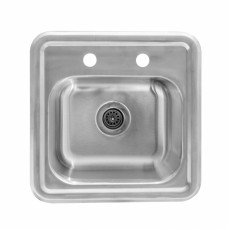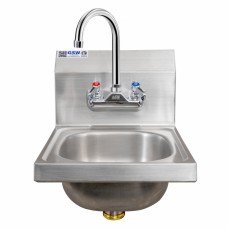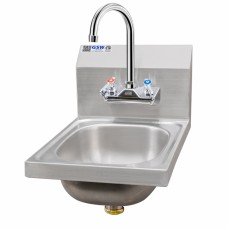

























Commercial Hand Sinks are designed to provide convenient and dedicated handwashing stations for restaurants, commercial kitchens, cafeterias, hotels, bars, healthcare facilities, schools, and other foodservice environments. These compact sinks help support proper hand hygiene and efficient kitchen workflow while meeting the needs of busy professional operations.
Stainless steel Hand Sinks are built for frequent daily use and are available in wall-mounted, freestanding, and compact configurations. Depending on the model, features may include gooseneck or deck-mounted faucets, knee-operated or foot-operated controls, side splashes, backsplash protection, integrated soap dispensers, and splash guards.
Choose a commercial hand sink based on installation type, basin size, faucet configuration, control method, available space, and local plumbing requirements. GoChefSupply offers commercial handwashing solutions for professional kitchens and foodservice facilities.