
Menu
Your Cart

Commercial Soft Serve Ice Cream Machines

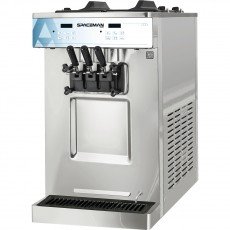
Commercial Soft Serve Ice Cream Machines are professional-grade food service equipment designed to produce and dispense soft serve ice cream, frozen yogurt, and other frozen desserts in high-volume commercial environments. Commonly used in ice cream shops, restaurants, cafes, convenience stores, and entertainment venues, these machines automatically mix, freeze, and dispense products with a smooth and consistent texture. Commercial soft serve machines are built for continuous operation, offering features such as multiple flavor options, precise temperature control, high production capacity, and easy cleaning systems. They are designed to deliver reliable performance, product consistency, and operational efficiency in demanding food-service settings. 


Showing 1 to 9 of 9 (1 Pages)

Frequently Asked Questions About Commercial Soft Serve Ice Cream Machines

The right machine depends on your expected daily servings, peak-hour demand, available space, and whether you need one or multiple flavors.

Single-flavor machines dispense one flavor, twin-twist machines offer two flavors plus a twist combination, and multi-flavor models provide additional flavor options for higher menu variety.

Many commercial soft serve machines can produce frozen yogurt and other frozen desserts, provided the mix is compatible with the machine. Gelato typically requires specialized equipment due to its different texture and formulation.

Production capacity varies by model, ranging from approximately 60 to over 500 servings per hour. Always choose a machine that meets your busiest operating periods.

Cleaning frequency depends on the model and local health regulations. Most machines require daily cleaning or regular sanitizing, while some heat-treatment models can operate longer between full cleaning cycles

Gravity-fed machines are simpler and more economical, while pump-fed machines introduce more air into the mix (higher overrun), producing a creamier texture and increasing serving yield.

Electrical requirements vary by model and may include 115V, 208V, or 230V power. Larger, high-capacity machines often require dedicated commercial electrical circuits.

Initial freeze times generally range from 10 to 20 minutes, depending on the machine, ambient conditions, and product mix.

Routine maintenance includes cleaning, sanitizing, lubricating approved parts, replacing seals and O-rings as needed, cleaning air filters, and scheduling preventive service according to the manufacturer's recommendations.

Most manufacturers offer a limited warranty covering parts and labor for one year, with extended warranties on compressors or refrigeration components available on many models.
We use cookies and other similar technologies to improve your browsing experience and the functionality of our site. Privacy Policy.